Step back in time with some personal stories
As part of our 50th anniversary celebrations, we’re delighted to share some recollections from people who have made a personal connection with our organisation in years past.
Each story sheds a unique perspective – not only on the history of our organisation, but also the caregiving environment at the time and the evolution of caregiver support in Aotearoa.
If you are inspired to share your own story, please get in touch with us here. We would love to hear from you.
Connection and training are key:
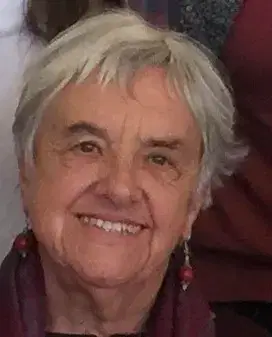
Life member, Dr Jill Worrall
One of our wonderful founders:
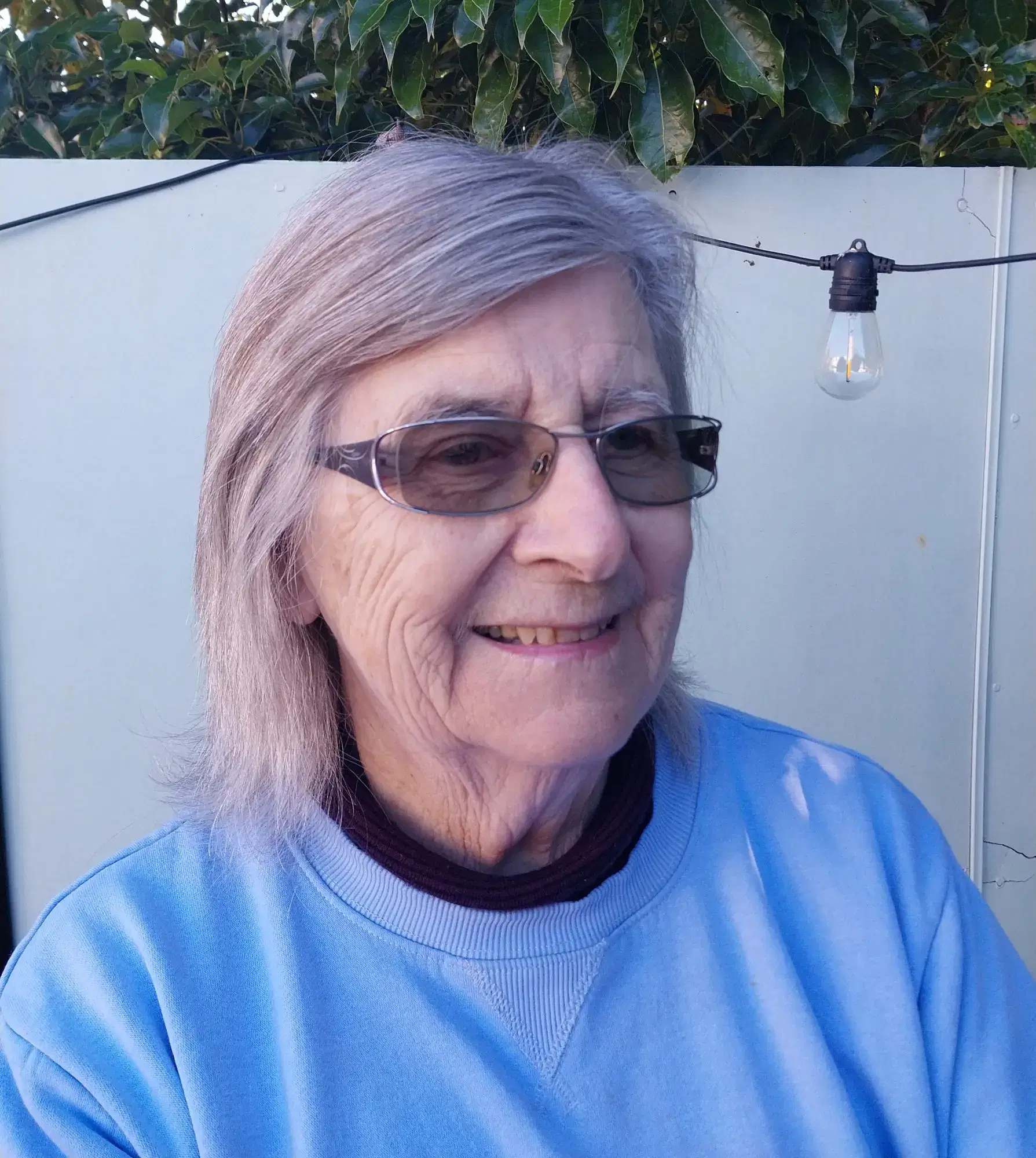
Bobby Duncan
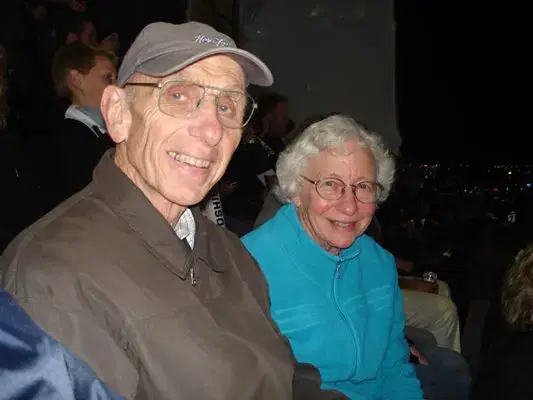
Life Members of Caring Families Aotearoa: Ewen and Gillian Laurenson
Jill Worrall: no caregiver should do it alone
Dr Jill Worrall is a life member of Caring Families Aotearoa. She is a retired Senior Lecturer at Massey University and was Journal Editor, Education Officer, vice Chair and Chairperson of the NZ Foster Care Federation (now Caring Families Aotearoa). She was a foster parent for 17 years, a foster care social worker, an agency CEO and a trainer and researcher in foster and kinship care.
When Jill looks back on the early years of what is now Caring Families Aotearoa, one thought comes quickly to mind: the dedication, enthusiasm and drive of its people.
Read more from Jill
Seeing the need for change
In the 1970s, Jill and her husband became foster parents, and their first-hand experience frustrated them deeply. She recalls the “high-handedness of the system” at the time – a phone call could come suddenly, telling a caregiver that a child would be leaving in two days and needed to be packed up.
“Foster parents were rarely treated as a part of the team around a child,” she says.
Caregivers were often told hardly anything about a child’s family background, had little or no contact with birth parents, and sometimes did not know where a child’s siblings had been placed. For Jill and others, it was clear that children, caregivers and whānau deserved much better.
A personal understanding
Jill’s commitment to children in care was also shaped by her early life. Her mother died when Jill was born, and she was raised in kinship care by extended family until she was eight and a half. When her father returned from the war, he brought her home.
That experience gave Jill a personal insight into what it means for children to move between homes, and the importance of attachment and belonging.
Joining the NZ Foster Care Federation
Jill joined as an “almost-foundation member” in 1976, the same year the national organisation was founded. She was already heavily involved in the Auckland Foster Care Association, which she’d helped to set up in 1974. Alongside people such as Raj Prasad and other committed social workers and caregivers, she was part of an early groundswell of foster parents saying, “Hang on — this whole business should be treated differently.”
More Foster Care Associations were springing up around the country, and a small group of determined volunteers were pushing for a better way to support children in care by focusing on the families who welcomed them.
Jill attended the first conference of the NZ Foster Care Federation in Auckland in 1977, joined the committee, and became Journal Editor – a role that helped connect caregivers across the motu at a time when many felt very much on their own.
A journal that connected caregivers
As Journal Editor, Jill helped give voice to what the organisation was trying to achieve. Published quarterly, the journal carried updates from regional associations, information about opportunities to meet, and articles about the need for training, planning and better support.
For caregivers, it was a lifeline. “You felt you were on your own,” Jill says. “If you saw your social worker once in six months you were lucky.”
The Department of Social Welfare agreed to fund the journal – around $5,000 annually – recognising it as an effective way to reach foster parents through their district offices.
Training, planning and persistence
From the beginning, the NZ Foster Care Federation worked hard to have foster parents recognised as part of the planning process for a child in care. Jill recalls Dennis Smith’s contribution to planning in the 1980s and Raj Prasad’s development of “A Journey into Foster Care” training course designed for social workers and foster parents to learn together.
The course, funded by the McKenzie Foundation, was “beautifully prepared,” but Jill remembers the disappointment of seeing it stonewalled by the Department of Social Welfare.
“Not only did we see the need for providing training for foster parents, we also felt strongly that social workers needed explicit training on foster care,” she says. “We wanted them to understand what it was to be a foster parent and a foster child.”
Despite resistance, the need was undeniable. At the time, institutional care was still common, family care homes were being introduced, and the sector was changing. Jill also remembers how “thirsty” caregivers were for training, and how essential it was for foster parents to be both prepared and properly assessed.
There was, as Jill says, “a lot of work to be done”.
An ambitious and determined team
Jill’s memories of those years are full of energy. Committee members travelled to Wellington once a month, often leaving their own families for two days at a time. In between meetings there were phone calls, regional association visits, and regular meetings with the Department of Social Welfare.
“It all came out of our own pockets,” Jill says. The work was voluntary and demanding – but it was fuelled by a shared belief that change was possible.
One standout memory for Jill was the International Foster Care Conference held in Christchurch in 1985. Jill was funded by the Government to travel to Brussels to promote the conference on a global scale, an experience she remembers as “very exciting.” The international perspective showed that many countries were grappling with similar issues, particularly around institutional care.
People who shaped the journey
Jill speaks warmly of the people she worked alongside who helped move the organisation forward. She remembers Mary Moodie, a caregiver who brought invaluable understanding of foster children with intellectual disabilities; Jane Thompson, whom Jill describes as a leading light; Ewen Laurenson, who remains a valued connection; and Raj Prasad, who made such a valuable contribution to caregiver training.
Jill went on to become Chairperson of the Federation for several years. Later, after leaving social work practice around 1990, she taught social work at Massey University for more than 11 years.
“Foster care and my time and consideration has led me to amazing paths,” she reflects.
Jill’s message for caregivers today
“Caregiving is hard, important work, and no one should have to do it alone.”
“You’re taking kids in who are traumatised and have had really hard lives,” she says. “You need continual contact with other foster parents, otherwise you can feel downright isolated.”
Her advice is to embrace training and keep learning. “You will never have enough training to help you do this job well,” she says. “I think that is my heart, really – that foster parents don’t do it alone.”
Looking to the future
For Caring Families Aotearoa today, Jill hopes the organisation will continue to be seen as a respected, but independent, partner – one that can work alongside Oranga Tamariki while also having a strong voice for caregivers and children.
She also recognises the growing importance of kinship care and hopes the organisation will continue to support whānau caregivers as well as foster caregivers. Jill is encouraged by the therapeutic training we offer and says she still keeps an eye on the organisation’s work.
Jill’s recollections remind us that the foundations of Caring Families Aotearoa were built by people who believed caregivers needed connection and a voice, children in care needed better planning, and birth families needed to be heard. A massive thank you to Jill for her dedication and enthusiasm to create change.
Bobby Duncan: looking back at the early years
Our 50-year story is shaped by people who knew that foster children, and the families caring for them, deserved better. Among them was Bobby Duncan, one of our early passionate founders, whose memories paint a vivid picture of the determination, energy and advocacy of a core group of volunteers who pushed for change.
Read more from Bobby
Bobby had fostered children for a couple of years before attending the first national meeting of foster parents in Wellington in 1975. At that time, she remembers, fostering was often a very limited and isolating experience, with sparse information and little support for the caregivers opening their homes.
“Children, generally preschoolers, would arrive with only the barest details – often just a first name – stay for a short time and then they’d be picked up again. There was nothing in between.”
A former primary school teacher, Bobby felt there had to be a better way. She connected with other caregivers in her hometown of Hamilton through the church organisation she fostered for, including the foster parents of Family Homes (houses owned by the government that were run by two adult caregivers, usually housing up to six children in care). When word came of the early Wellington meeting, Bobby travelled south with colleagues John Sutton and Chris Broadhurst to see what might be possible if foster parents joined together and spoke with one voice.
She still remembers that journey clearly: uncomfortable seats on a night train from Hamilton to Wellington, arriving at six in the morning before heading straight into two full days of meetings. “The resilience of youth,” she recalls. It was already clear to those gathered that more needed to be done for children in foster care.
“Just as importantly, at that stage we felt there needed to be more done for foster parents, because how could we help the children, if we were not informed, or involved in the process? For a number of us, that was I think, the driving force behind it all.”
A national conference for foster parents
The impetus and common purpose from that first meeting led to the first foster care conference in Wellington in June 1976, bringing together people from Auckland, Hamilton, Waikato, Wellington, Christchurch, Timaru and Otago. The key outcomes of that conference were the appointment of a National Executive Committee, of which Bobby was a part, and the formation of the New Zealand Foster Care Federation (“the Federation”), to represent the voice of foster parents at a national level. For Bobby, this inaugural conference was part of a necessary process: a way of turning shared concern into organised action. It was such a success that the Federation made a commitment to hold a conference every year.
Early challenges
The Federation set out to gain recognition for foster parents as an important part of the team around each child. In Hamilton, Bobby says support from Family Home parents was crucial because they already had good contacts at the Department of Social Welfare (“the Department”).
When Bobby helped establish the Waikato Foster Care Association in 1976, the Department became closely involved with their work. Even so, Bobby says foster parents were too often dismissed when they tried to speak about what was happening for the children in their care.
“It was getting foster parents listened to – and being treated as partners, rather than bystanders – that became one of our central goals. To us that was important.”
Another urgent issue was education. There was no training for foster parents, even though many were caring for children with complex behavioural needs. When it became obvious that the Department was not going to provide education for foster parents, the Federation stepped in. With Raj Prasad and Margaret Craig, Bobby helped to develop and test an education programme, which was taken around the North Island through local foster care associations. For more than a year, Bobby, Raj and Margaret would regularly hit the road, endeavouring to reach as many foster parents as possible. The “Journey into Foster Care” programme was well received by foster parents, even if official support never matched the need. The Federation was developing a reputation for being practical, resourceful and willing to act.
Bobby remembers that one of the Federation’s early strengths was connection and the support foster parents offered each other. At Waikato Foster Care Association meetings, there was nearly always someone who had faced a similar challenge and could offer practical help.
“Even though the Social Workers had a lot of theoretical knowledge, many of them weren’t parents. We turned to each other for support with behavioural challenges and other common issues we were dealing with.”
Bobby served on the National Executive Committee of the Federation for nine years and was Chairperson for three. All of it was voluntary. She recalls a strong focus on raising the profile of fostering and pressing for change at a national level.
“The relationship between the Federation and the Department was tremendously important – I can remember during my time as Chairperson I would go to Wellington the day before the Executive meeting and spend a day at the Department’s head office, meeting with critical people, discussing what was needed, where we were getting to, pushing for progress and really challenging them. It was so well accepted that we were persistent – the Federation was very much respected by the Department at that time.”
An international presence
With the support of John Iorns, Bobby received a Churchill Fellowship in 1978 to study foster care practice overseas and bring ideas back to New Zealand. She travelled to the United States of America, Canada and Australia and presented her findings to the Department of Social Welfare upon her return.
“The Federation was not inward looking – we knew we could learn from what was happening overseas to make things better for the children and the foster parents here in New Zealand.”
“Part of my focus was to see how foster care could be used in the prevention of child abuse. Moving it from being an ambulance at the bottom of the cliff to a fence at the top.”
Bobby was advised to set up a foster care unit through Parentline, a telephone service offering parenting support and advice, to prevent child abuse and neglect. However, it lost funding after a 6-month trial because it was difficult to prove its effectiveness.
“We could see that these parents went on and settled and didn’t abuse their children, but what we couldn’t show was that abuse was imminent if we hadn’t intervened. You can’t measure negatives.”
In 1985, the New Zealand Foster Care Federation hosted the fourth international foster care conference in Christchurch. We can only imagine the huge amount of work invested in ensuring such an important event ran smoothly. Bobby, who attended as a helper, says it was a highlight – through meeting and sharing stories with delegates from other countries, she found that parenting was “really a universal experience.”
Bobby left the Federation shortly after that conference to study law at Victoria University. She went on to specialise as a Counsel for Child for 15 years – and today she still retains an interest in the rights of children. Bobby is now retired.
A message for today’s caregivers
Bobby’s message is as clear as it was 50 years ago: stay passionate and keep speaking up.
“As foster parents we need to make sure that children in care are not at the bottom of the priority list. We were passionate about what we were doing. It wasn’t for us, it was for the children. Retain that passion for the rights of children and that will demand that you are heard.”
Thank you Bobby for sharing your recollections with us and for your wonderful contribution as a pioneer of the New Zealand Foster Care Federation – shaping the direction of our organisation and making such a positive difference for foster parents in those early years.
Ewen Laurenson: improving outcomes in foster care
Ewen Laurenson’s connection with the NZ Family and Foster Care Federation spans 20 years. He was a person of influence during the time the organisation was gathering momentum, a man who worked consistently hard to ensure the wellbeing of foster families, children and young people in care.
Ewen is a former caregiver and an Honorary Life Member of Caring Families Aotearoa. We are immensely grateful for his dedication and loyal service, which provided measurable benefits to caregivers over the years.
Read more from Ewen
A pioneer with a vision
With his wife Gillian, Ewen started the Open Home Foundation in 1977 – a Christian child and family support service involved in the care and protection of at-risk children. They began to develop a network of Christian foster families in Wellington as an alternative for children placed in state care. In 1986, due to its rapid growth, the Open Home Foundation | Te Whare Kaupapa Āwhina became a national organisation – and due to the extraordinary work of Ewen and Gillian – it has since developed an international presence too. In 1995, the couple were awarded the Queen’s Service Medal for their service to foster care in New Zealand.
From committee member to instrumental Chair
Ewen joined the NZ Family and Foster Care Federation in the early 1980s, representing voluntary agencies working in the care sector on the Federation’s Executive Committee.
He went on to become Vice Chair, then Chair of the Executive Committee. He says there were some consistent items on the agenda.
“We were concerned with building strong and effective local branches of the Federation, foster parent and social work training, foster family support, the sensitive and supportive handling of allegations of abuse, bi-cultural relationships, the involvement of the natural family in the foster care journey, good working relationships with the Department of Social Welfare and other relevant organisations and reaching a national and across-agency agreement on foster care standards.”
Phew! Many of those issues remain a driving force behind our guiding principles today.
“It was considered essential that good foster care outcomes required the participation of all involved – including the child or young person and, when possible, their birth family, the foster family, the foster care agency and other health and educational specialists.”
“These deliberations were the forerunner of the Children, Young Persons and their Families Act 1989, which was seen as a legal watershed underpinning good foster care provision.”
A passionate team
“When I think back on these years it is the dedication and total giving of many people who served on the executive, determined to improve foster care outcomes for all involved that first comes to mind.”
“I joined some outstanding people from many parts of the country who were passionate about the quality of foster care in New Zealand. These women and men believed that the foster care system needed ongoing education for it to constantly provide a quality service.”
“Not that we believed we could do it on our own, but with the cooperation of all providers of foster care.”
The extent to which this vision was shared across the care community was evident at each well-attended annual conference of the NZ Family and Foster Care Federation.
“Our annual foster care conference provided a wonderful opportunity for guest speakers, lectures, workshop training, sharing together in breaks and having fun together,” says Ewen.
The Annual Conference Reports from these early years have been meticulously archived and are full of stimulating material, such as research at the time on foster care, planning for children in short-term care, the grief and stress that foster children experience and the need for self-knowledge.
“To mention names from this time is a challenge, for inevitably equally deserving people are left out,” says Ewen. “However, I would like to mention Mary Moody, Jill Worrall, Ngahuia Donnell and Barbara Burt. Barbara was our secretary for many years and because she received some recompense, carried much of the day-to-day administration of the organisation. Her service was immense.”
Progress against the odds
Ewen’s time on the Executive Committee of the Federation ended in the year 2000 when he became seriously ill. However, he has remained a staunch supporter of the organisation behind the scenes.
“The progress made by [Caring Families Aotearoa] on limited resources, the growth and the ability to provide support in the way it has to caregivers has been tremendous,” he says.
“The worth of foster parents generally in our community was not recognised. It is a huge task to open your heart and home to a child or young person – it is marvellous to see the organisation is still striving to see they are looked after.”
Thoughts for today’s caregivers
“I really appreciate the vulnerability of foster parents when they come under pressure. Especially towards the end of the day, when everyone can be tired and pushed to their limits, it is so easy for something untoward to be said.”
“Over the years I have really come to know the value in recognising that tiredness or stress and the need to pull back from any situation or conflict that may be arising and take a breath. Just to be sure you are in control of your response.”
Ewen also has some words of advice for those caregivers who have a trusted relationship with their Social Worker.
“It is equally important that you are quite open with your social worker so that you can talk about these moments of vulnerability – and they can suggest ways to handle it. We all have our weaknesses and our vulnerability – it is part of being a human being.”
Ngā mihi nui, Ewen for your wonderful contribution to the caregiving community in Aotearoa New Zealand.
Sue Iti: a legacy of care
When did you begin caregiving?
My journey in the world of caregiving began in the late 1980s, when I began relieving for a Family Group Home in Hamilton with my husband. His parents were caregivers there, so we started to volunteer to provide them with weekend relief. When a vacancy came up for permanent Family Group Home parents elsewhere, we applied and got the job.
We were responsible for six foster children at a time – sometimes it was closer to 10 because the Police would bring sibling groups who needed emergency care. We would take care of those children until they found placements. Being a young foster parent, I was often mistaken for a rangatahi in care, probably because I didn’t fit the visual brief. I remember feeling shocked when the Police knocked at the door for the first time, asking to speak to the Family Home Manager. It felt very strange saying “That’s me.”
Everything fell into place quickly. We were young and confident – drawing from our experience as relievers to apply the same house rules. The support we provided was quite proactive and we took the kids out and about a lot, prioritising family connection.
Read more from Sue
Did you explore other types of caregiving?
In the early stages of our caregiving journey, an 11-year-old boy came into our care. His connection to us was strong and he decided he wanted to stay with us. This small boy came from a dysfunctional background where whānau placement was not possible, so he became part of our family. Through all the ups and downs, he is now a strong and thoughtful 45-year-old man, who we are proud to call our son. Family is at times not determined by blood but those who choose to be in your life – he chose us!
We eventually moved to Tauranga, where we managed another Family Group Home for six years. During that time, we met a young man who really needed bespoke care; he was at his most stable when he was with us. We took him into our long-term care from the age of 16 to 22, and another young person who was struggling with placements.
Can you tell us about your experience with the [then] New Zealand Family and Foster Care Federation?
I became a member of the Waikato Foster Care Association when I was a young caregiver at Silverdale Family Home. Back then, Family Group Homes were quite a big thing, but it could be an isolating role. Other Family Home caregivers became your anchor. At the monthly Association meetings, I would receive support from experienced caregivers, who helped to get me through any frustrations, back to where I needed to be. I made some good friendships. The meetings also gave me an insight into caregiver rights and relevant legislation.
The annual conferences hosted by the NZ Family and Foster Care Federation were more than just professional gatherings — they were a lifeline. These events brought together caregivers from across the country, creating a space where stories were shared, challenges were understood, and lifelong friendships were formed. My husband and I looked forward to these conferences each year, knowing we’d be surrounded by people who truly understood the heart and complexity of caregiving.
In the late 1990s, with the support of many passionate individuals, we established the Bay of Plenty Foster Care Association — a milestone that marked a new chapter in regional caregiver support.
In 2006, I was honoured to join the Federation professionally as its first Regional Coordinator, for the Central North region. At the Federation’s conference that year, it transpired that many caregivers across the country wanted a Regional Coordinator. So, the role turned into one of Regional Community Liaison, to respond to the need for support groups across the country. I worked alongside Gaylene Lawrence, our visionary Executive Officer, Toni Hewett in administration, and Tina Grubba who led Allegation Support. Our head office was humble — a small relocatable tucked behind Gaylene’s property in Havelock North — but our mission was anything but small.
One of our most impactful initiatives was the expansion of caregiver support groups. What began as a handful of networks quickly grew into a vibrant web of regional communities, each offering connection, advocacy, and practical support. As the regions flourished, so too did the role of the Regional Coordinator, evolving to meet the growing needs of caregivers across Aotearoa.
Education was another cornerstone of our work. The pilot of the Certificate in Whānau, Family and Foster Care was a proud moment, offering caregivers a formal qualification that recognised their expertise and commitment. While the Diploma pathway didn’t gain the traction we’d hoped for, the success of the certificate programme was a testament to the professionalism and dedication of those in the caregiving community. By the time I left the organisation in 2010, there were five Regional Coordinators who were employed to support the training of caregivers.
One of the most unforgettable experiences of my career was attending the IFCO (International Foster Care Organization) conference in Dublin, Ireland. Alongside a small group of caregivers, I had the privilege of representing our community on a global stage. The opportunity was transformative — not only for the knowledge we gained, but for the deep connections we formed with others who shared our passion for child wellbeing. It was a reminder that while our work is local, our impact is global.
As I reflect on these years, I am filled with gratitude — for the people, the progress, and the purpose that has shaped this journey. My hope is that others will be inspired to step into this space, knowing that they too can be part of something extraordinary.
In your eyes, what makes Caring Families Aotearoa so special?
It is the unique opportunity for caregivers to connect, to feel supported and not isolated. Caregiving is a lot easier to manage when you are understood. As a foster parent, you have to be quite resilient in what you hear and see – and how to act. What helped us get through it was having good people around us that understood our “why”.
What message would you like to leave with our caregiver members?
Throughout my journey, one motto has remained close to my heart — a phrase that captures the essence of caregiving: “Ordinary people doing extraordinary work.” This simple yet powerful statement reflects the spirit of every caregiver I’ve had the privilege to work with. We are not defined by titles or accolades, but by the quiet, consistent, and courageous acts of love and support we offer every day.
I get frustrated when I hear people say, “I’m just a caregiver”. You are so much more than that. Own your role – it is such an important role to the people in your care. You stand in your own mana. You give love and guidance to a young person so they can become something more.
The worth of caregiving is under-estimated. It takes a toll. We hold traumatic young lives in the palms of our hands and deal with them every day. If you are one of those people that can be someone’s light at the end of their dark tunnel, you are quite remarkable.