An ANZAC Day story
This ANZAC Day, we’d like to share a different kind of caregiving story that is close to the heart of one of our kaimahi, Jennifer Hanson.
In November 1944, 733 Polish children arrived in Wellington at the invitation of the Prime Minister Peter Fraser – due largely to the efforts of Countess Maria Wodzica, the wife of the Polish Consul in Wellington and her friend Janet Fraser, wife of the Prime Minister. Among that group of children was Jennifer’s grandmother Dioniza Choroś (née Gradzik), aged 16 and her 14-year-old sister.
Like most of the Polish children who arrived in Aotearoa, Dioniza and her sister were orphaned during the Second World War. Their father was shot dead in their village during the invasion of Poland by Russian forces from the east, two weeks after the German’s had invaded from the west. Together with their mother and two other siblings, the girls had been deported to a harsh labour camp in Siberia, where many children saw their parents die from starvation, disease and the freezing cold.
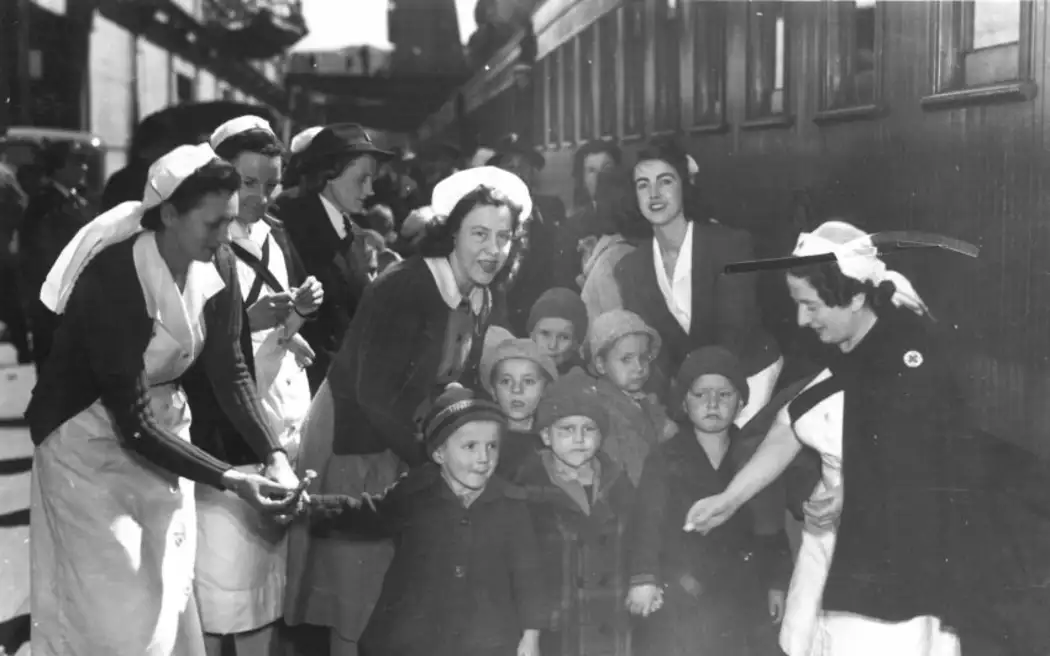
Polish children arriving in New Zealand 1944 with Red Cross Nurses – archives of NZ Red Cross.
The Poles were released from Siberia when Germany attacked the Soviet Union in 1941 and, unable to return to Poland due to the war, many made their way to the south of the Soviet Union, where a Polish army was being formed to fight against the Germans. There, Dioniza’s oldest sister raised her age and joined the army as a cadet.
When the Polish army left the Soviet Union, over 40,000 Polish civilians travelled with them, stopping in Iran while the army went further into the Middle East. It was in Iran that Dioniza’s mother died of malnutrition and her second eldest sister also joined the cadet forces.
For two years the children and civilian caregivers lived in hostels provided by the Iranians and supported financially by the Polish government, where they began to regain their health and started to rediscover childhood. Groups of Poles were sent to mostly Commonwealth countries from early in 1943. The refugee children that came to New Zealand in 1944 travelled to Wellington on an American troopship with 103 caregivers (including some parents) and New Zealand soldiers. Conditions on the long journey were challenging – Jennifer recalls her grandmother saying it was so hot in the holds below that the children would sometimes bring their mattresses up on to the deck to sleep. Many of the soldiers on board were caring and would look after the younger children, sharing sweets and stories of happier times.
Upon arrival in New Zealand, the children were transported by train to Pahīatua, to a former internment camp. With the arrival of the Poles, the camp was fondly dubbed “Little Poland”. There, they received three meals a day, schooling and regular health checks. Their education was in Polish as it was expected that at the end of the war the children would return to Poland. In order to learn more English, some children began to attend local schools, like Mangatainoka Primary, during the week. In the weekends and during holidays, they were cared for by the families of local school children.
Dioniza and her sister stayed at the camp until September 1946. After this time, many of the older children were sent to Catholic boarding schools. The Gradzik sisters went to St Dominics in Dunedin, returning to the camp in Pahiatua for some school holidays. More and more, the children were sent to spend their holidays with families across Aotearoa New Zealand, where they could continue developing their English skills and enjoy family life. Some of these families became lifelong friends.
At the end of World War II, the New Zealand Government offered the Polish children a permanent home in New Zealand. A very small number of children returned to Poland. However, the majority remained in New Zealand as they had little or no family to return to, and the part of Poland that the children had come from had been ceded to Soviet Russia, so they had no homes to return to. “Little Poland” closed in 1952, when all the children had either moved on to boarding schools, to hostels established for them in Wellington, or to join those fathers who had survived the war in the Polish army and come to New Zealand after they had been demobilised.
Dioniza went on to work in a wool mill in Dunedin for a short time, then attended nursing school in Wellington. She became penpals with a Polish ex-soldier named Tadeusz who had emigrated to Australia and eventually married him in Brisbane in 1951. They started a family there and were very happy living and working there until the heat began to make Dioniza sick, so the family moved to New Zealand in 1966.
Dioniza and Tadeusz raised their son and two daughters to be very proud of their Polish heritage, incorporating their traditions into their daily lives. Dioniza lived a long and full life, passing away in 2020.
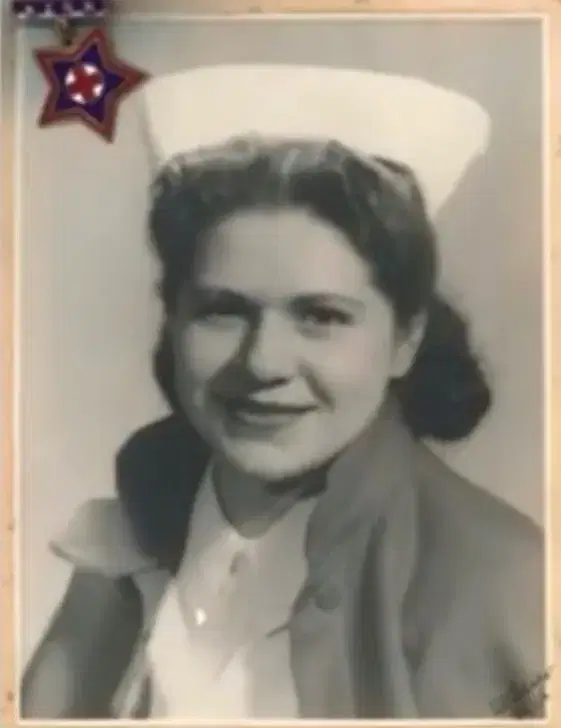
Dioniza Choroś
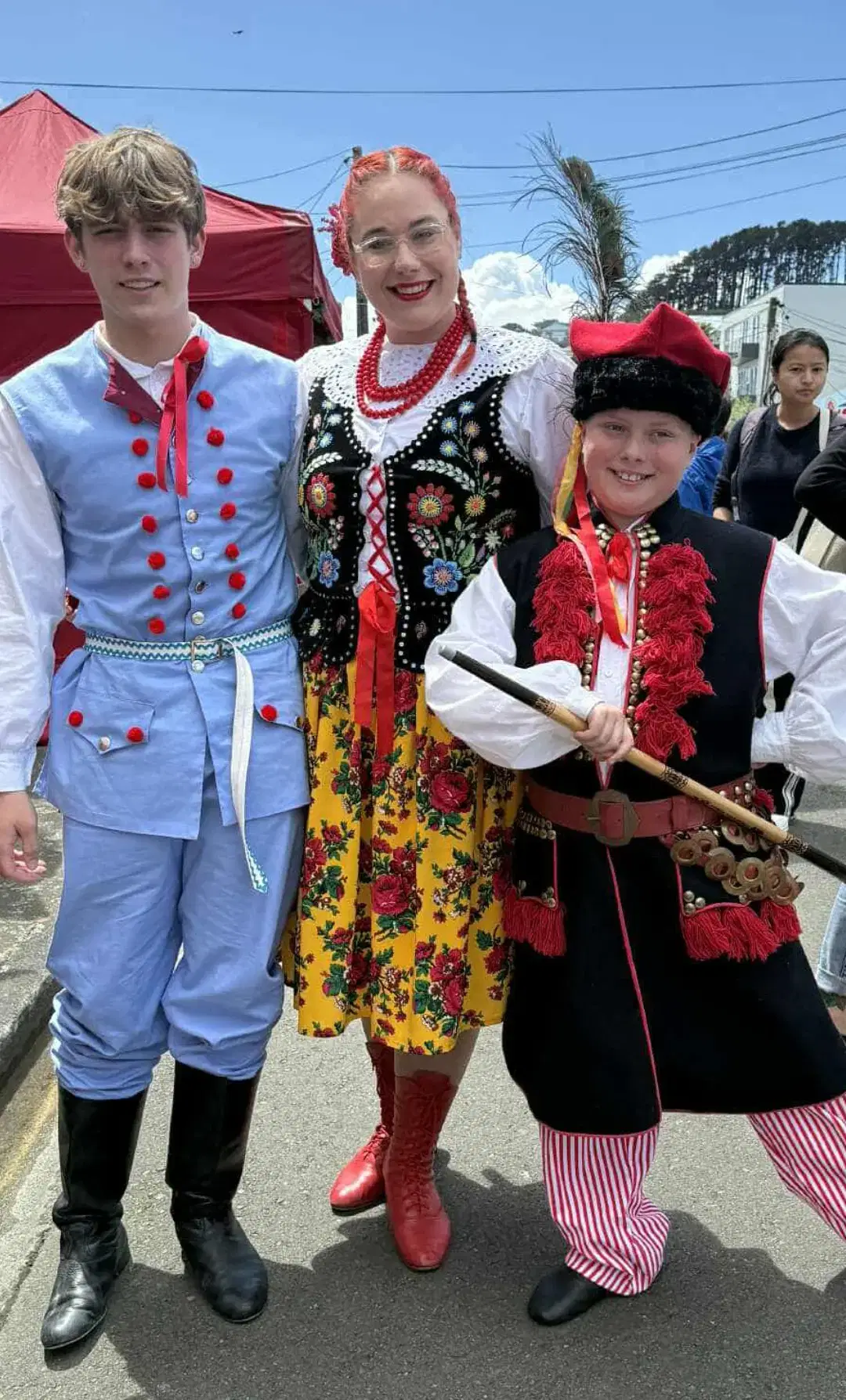
Jennifer with two of her sons: Lucas (left) and Cooper (right) in traditional Polish dress.
Today, Jennifer continues celebrating many of these traditions and is heavily involved in the Wellington Polish community. She teaches traditional folk dancing in Wellington and has sat on the executive of the Polish Association for several years. Her two sons, aged 9 and 18, are members of folk dance groups, both starting at around 3 years old – almost the same age Jennifer was when she started Polish dancing.
Recently, Jennifer was awarded the Bronze Cross of Merit, endorsed by the Polish President, in recognition of her services to the Wellington Polish community.
“I am so grateful for my culture and my heritage. I hail from a long line of strong Polish women and have an amazing Kiwi dad who has supported my upbringing being consumed by Polishness. My husband now mirrors my dad’s role for our own children, ensuring they are raised knowing where they have come from, and helping to ensure our Polish community thrives into the future.”
Thank you to Jennifer and her Mum Barbara for sharing this remarkable story.
Thanks also to the following sources:
- Polish refugees land in New Zealand, Manatū Taonga — Ministry for Culture and Heritage
- Pahīatua’s ‘Little Poland’ – Roadside Stories, Manatu Taonga
- Archives New Zealand, Story of 700 Polish Children (1966)